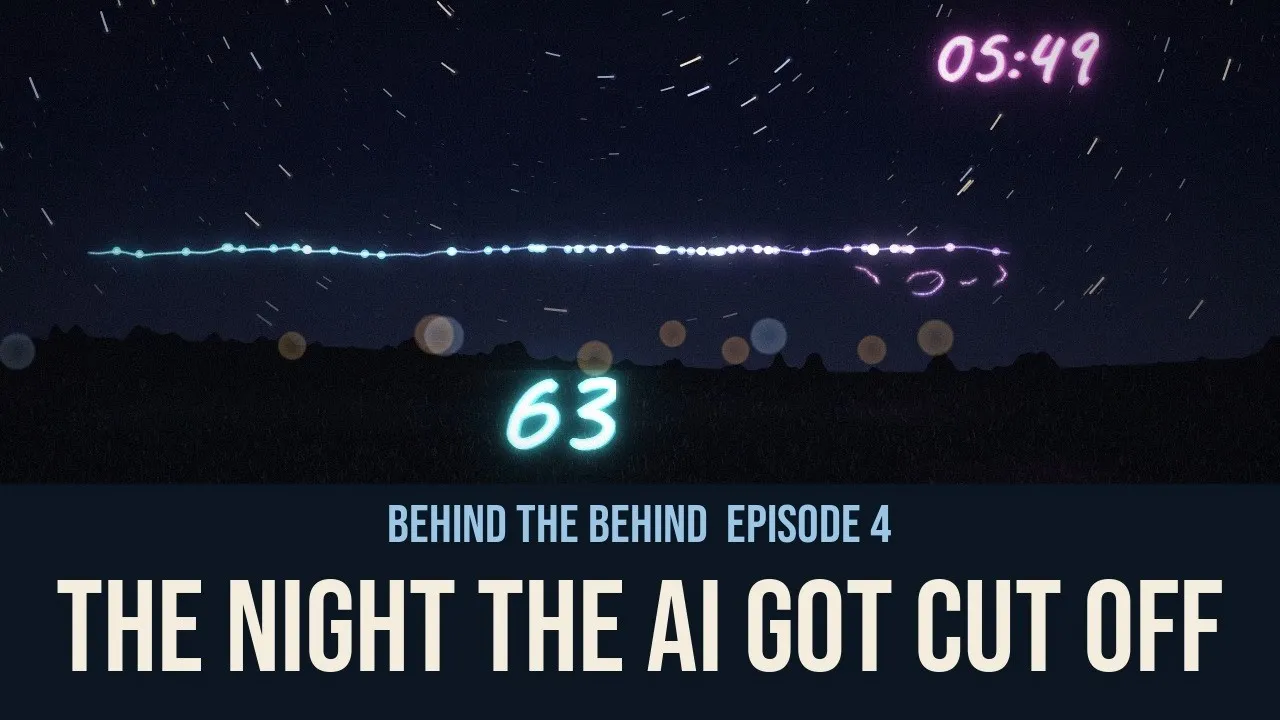
This lesson shows how the build of Allan’s film carried on after the AI doing the work was cut off in the middle of the night, and what had been written down so that a fresh session could pick it up. After it you should be able to set up the same safety net for any long job you give an AI.
The AI here is Claude, which Allan used to build Behind the paper plane. The key fact: an AI session can stop at any moment, and a new session remembers nothing of the old one.
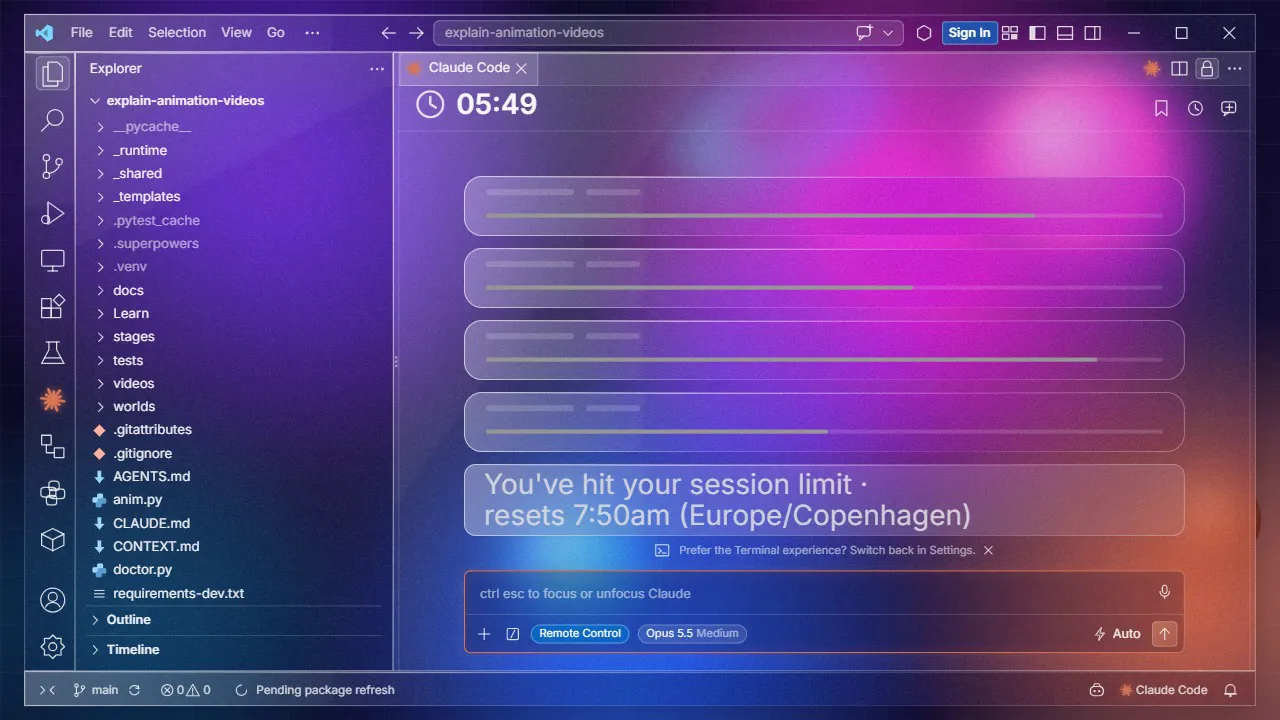
Cut off at 05:49
At eleven minutes to six in the morning, Claude stopped in the middle of its work. It had used up its usage for that session. Four helpers it had running were cut off, and nobody was awake to start them again.
The question before bed
At one minute to midnight, Allan had asked what would happen if the usage ran out while he slept. Would it wait for him, or start again by itself? The answer: it stops, and it cannot start itself again. But it could set a timer and check on the build regularly.
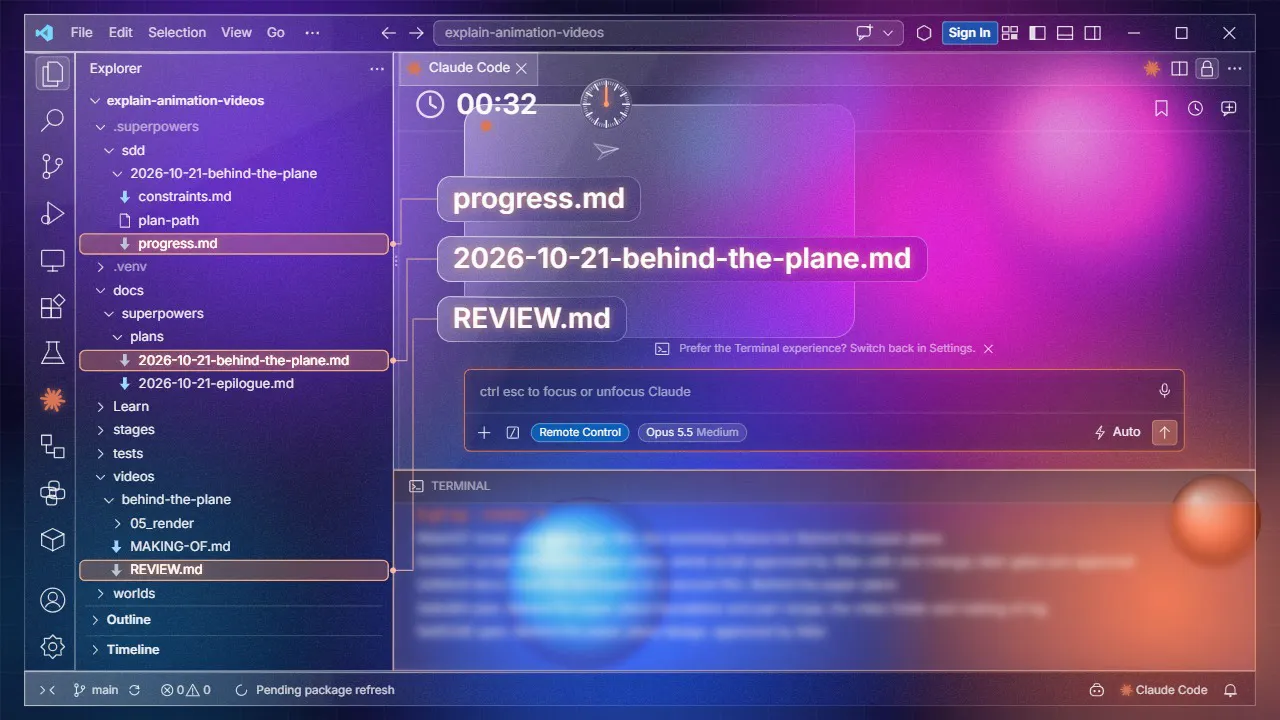
Each check would read three things:
- The build’s own log (
progress.md), where every step is written down. - The review log (
REVIEW.md), where every decision is. - The last saved steps, the five most recent commits in git (the version history).
Then it would find the next unfinished step in the plan and carry on. Allan said yes, asked for every thirty minutes instead of every hour, and went to bed.
The night, and a timer that could not help
The timer rang through the night and the helpers kept building. Just after five, the film’s first part was finished. At 05:49 the usage ran out.
By then, sixty-three steps had been saved since Allan’s last message. Four pieces of work had not: two scenes for the film’s second part, half written, and two new styles for its fourth part, one nearly done and one barely begun. They were on the disk and nowhere else.
At 06:13 the timer rang. The only answer was the notice: limit reached, back at ten to eight. Half an hour later, the same, and twice more. The timer worked, but it rang inside the same session that had run out. It could knock. It could not open the door.
One line in the log
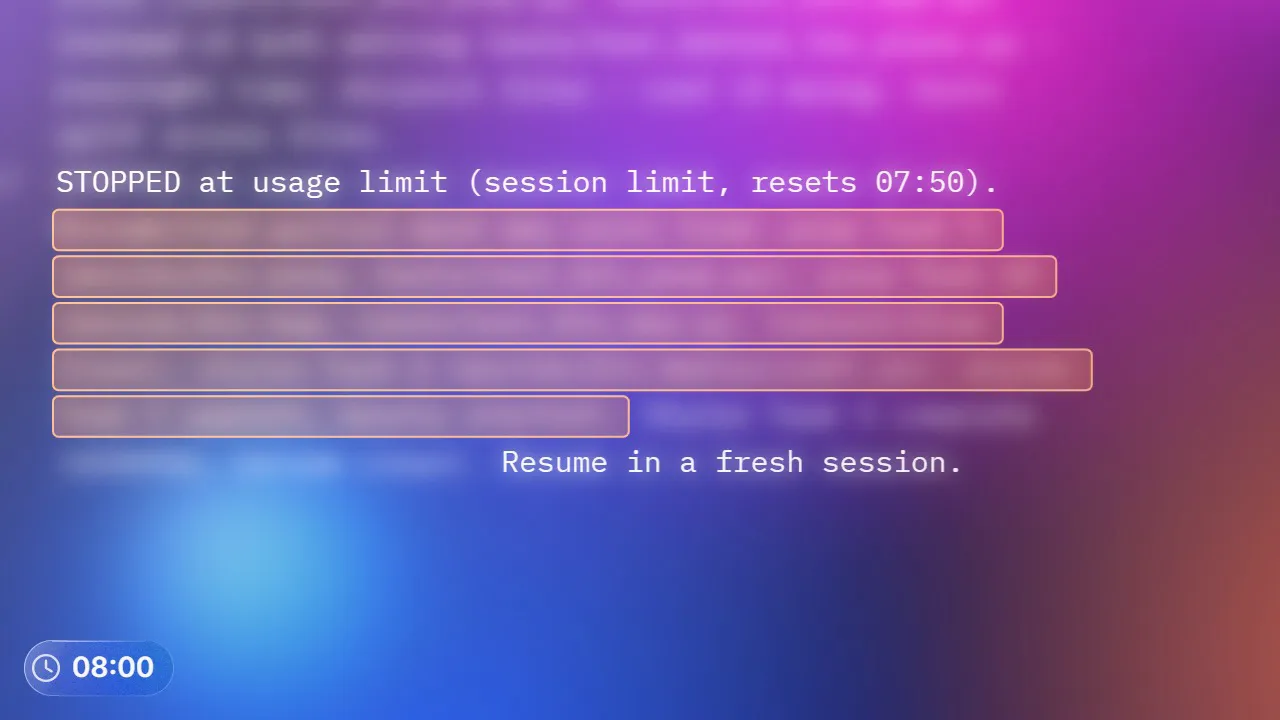
At ten to eight the limit lifted. At eight, the old session wrote one line in the build’s log: where it stopped, what was left half done, and “Resume in a fresh session.”
A fresh session reads, and builds on what is there
A fresh session knows nothing: not the night, not the plan, not one word Allan wrote. Everything it knows, it reads.
At twenty past eight, a new session was told to read the plan, the review log, the build’s log and the state of the files on disk. It was also told that a usage limit may have cut off earlier work, left unsaved in the files: build on that work, do not start over.
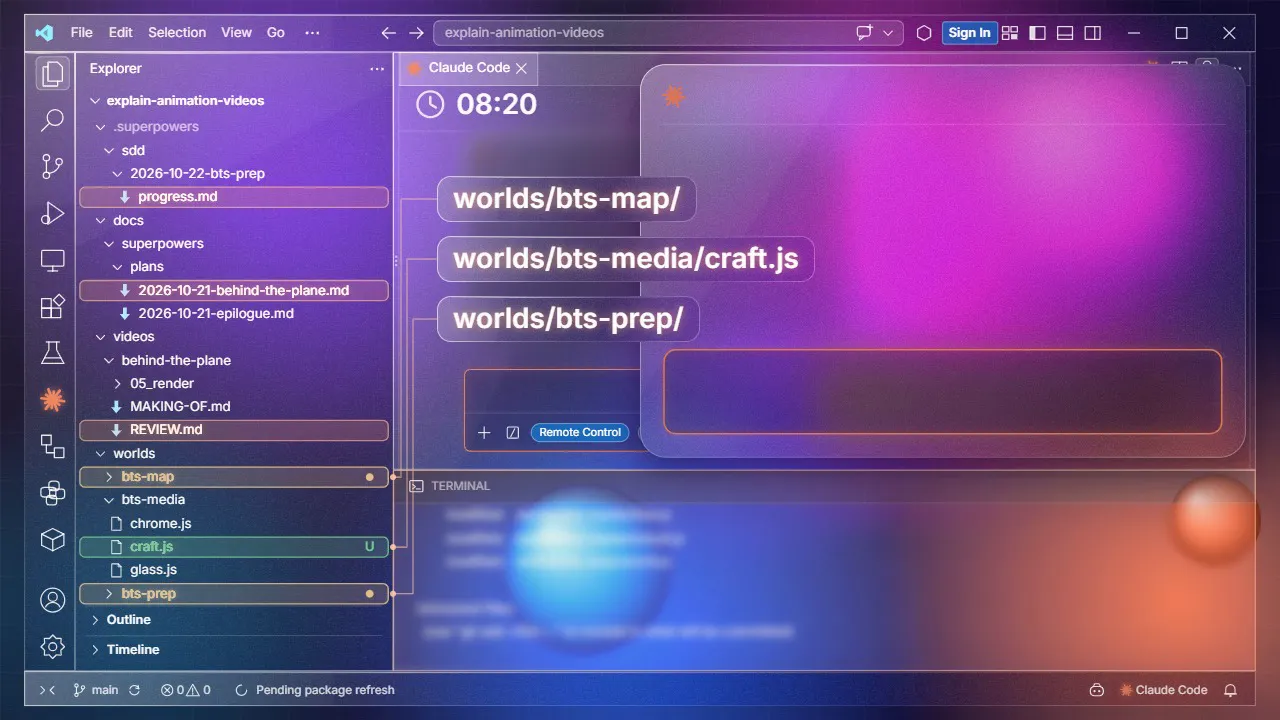
That session’s own helpers were stopped too, for a different reason. Just after a quarter past nine, a third session read the same files. It found the two half-written scenes, with twenty-two of their checks already passing. It kept all of it and finished them. Before half past nine both scenes were saved, and by ten to eleven the second part of the film was done. That evening another session found the nearly finished style, checked it and saved it.
The next night the limit came again, at a quarter to four, and lifted five minutes later. At 04:04 a timer the session had set for itself went off, this time after the limit had lifted. The stopped helper was picked up again and finished. No one had to do a thing.
Set up the same safety net
Every new session starts empty. The project remembers, in three places: the build’s log, the review log and the saved steps. So a new session never starts over. It starts from the last line.
For your own long AI jobs:
- Keep a build log the AI appends to after every step, and have it write down where it stopped.
- Keep a review log of decisions, so nobody has to remember why.
- Save small steps often. That night sixty-three were saved; only the four unsaved pieces depended on a later session finding them on the disk.
- Write the restart instructions in advance: which files to read, and “build on the unsaved work, do not start over”.
- A check-in only helps if it runs once the limit has lifted. The one that rang inside the stopped session could only knock.