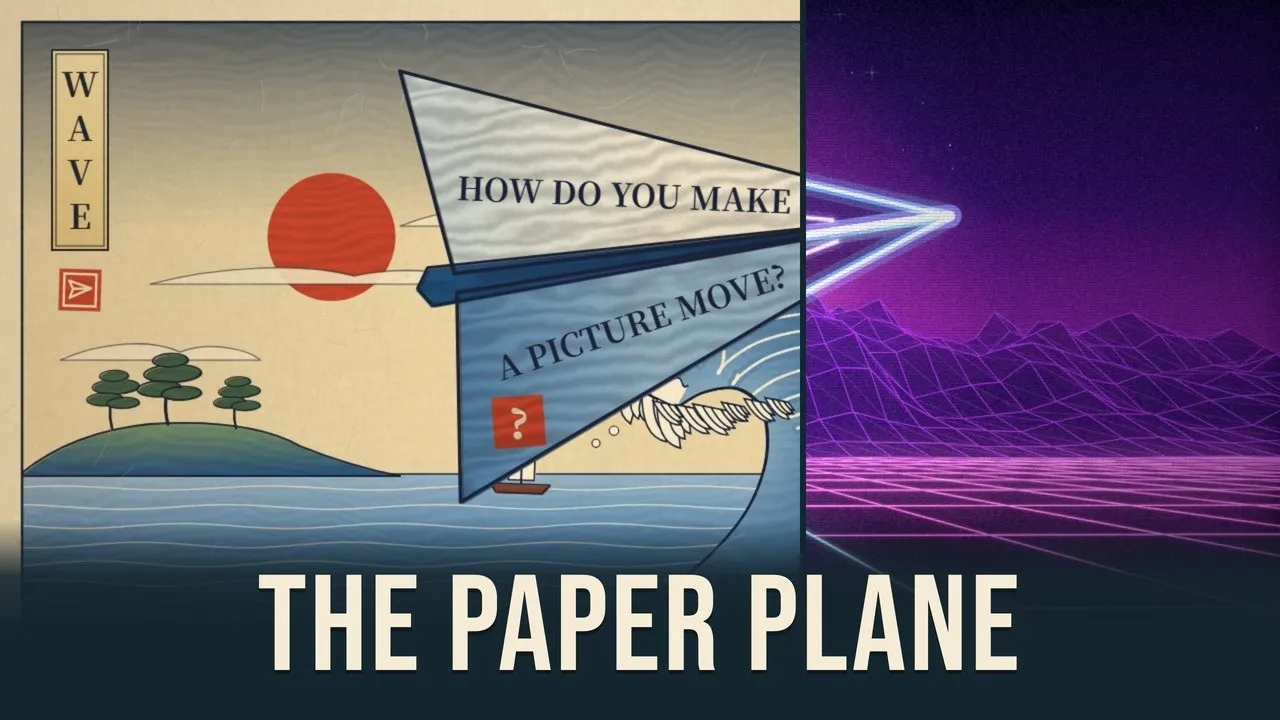
This lesson explains the one trick behind every moving picture, and what changes (and what does not) when the same trick is drawn in a different art style. After it you should be able to make a drawing move yourself, with a pencil and a small notebook.
The question
A child has drawn a little plane on every page of a sketchbook and flipped the pages, hoping it would fly. It only smudged. So the child folds a question into a paper plane and throws it at the bedside lamp: How do you make a picture move? The lamp answers with a story, and the plane carries the question through 25 art styles.
Many pictures, all still
For a long time, people made pictures that looked alive but stayed still. Shadow puppets moved, but only while a hand held them. An ink stroke caught a bird mid-flap, then the ink dried. A monk drew little creatures down a margin, each a little further along, and read in a row they almost moved. Woodblock prints, the printing press and newspaper photos made pictures by the thousand, every one standing still.
The lesson: making a picture many times does not make it move. Something else is needed.
The trick: still pictures, shown fast
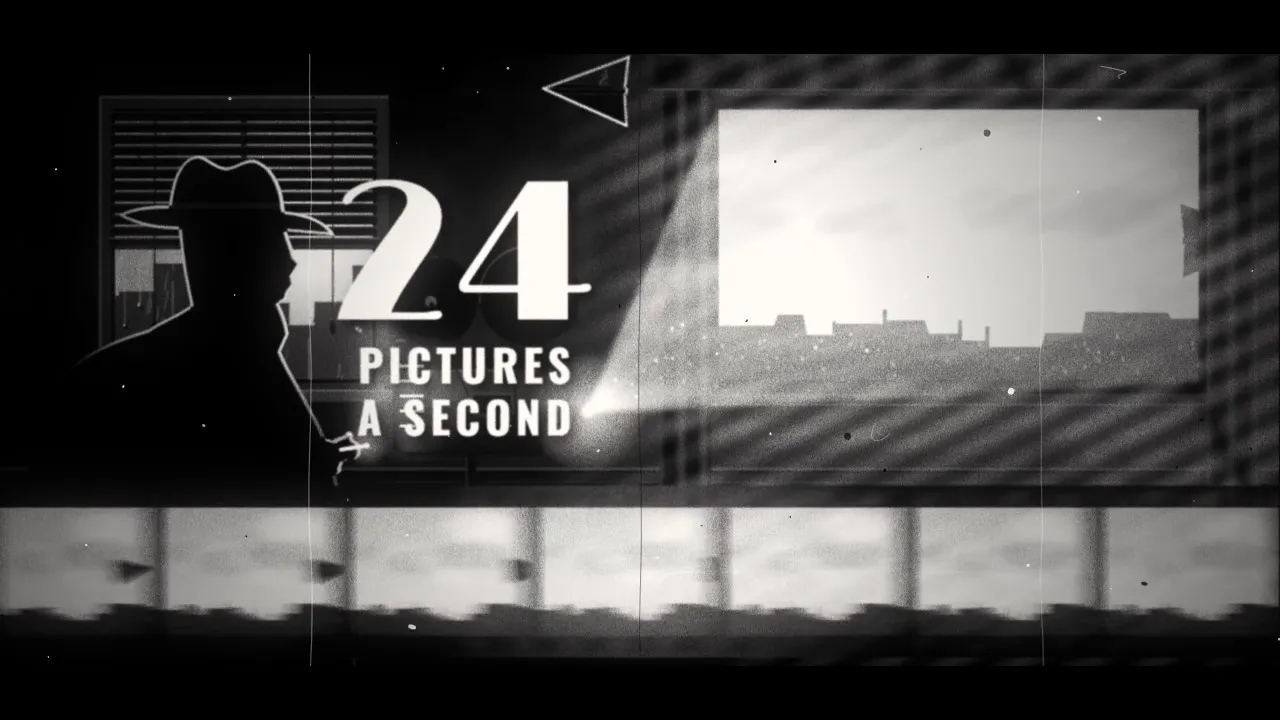
A strip of film is a row of still pictures, each a hair different from the last. A projector shows them at 24 pictures a second. Fast enough, and nobody sees a still picture any more. As the detective in the film puts it: the pictures don’t move, your head does the moving.
Then a teacher draws how your head does it. Here is a plane. Here it is again, a tiny bit further along. Show your eyes the two pictures one after the other, fast. Your brain cannot see a jump that small, so it fills in the gap. It does not see two planes standing still. It sees one plane, flying.
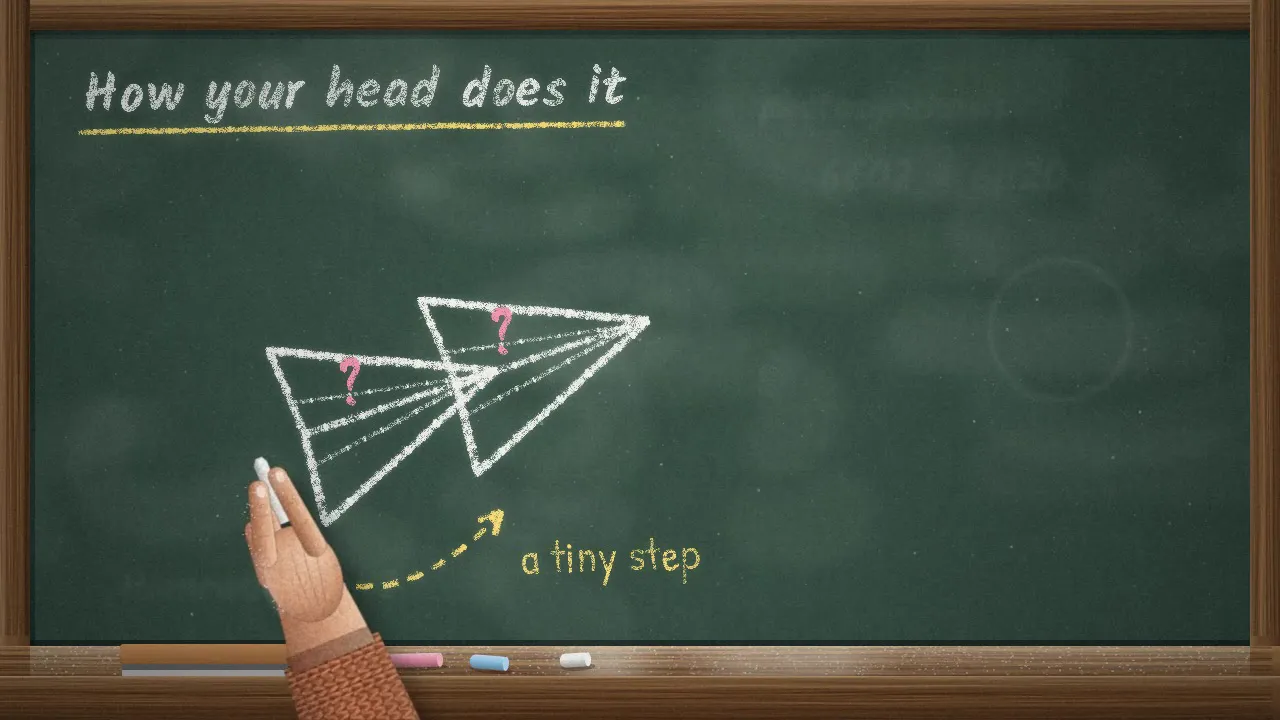
That is the whole secret: still pictures, shown fast, each one a tiny step along. The film explains it as your brain filling in the gap, not the older idea that a picture lingers on the eye.
Stop motion uses the same trick with real things. A clay figure is squished a little and photographed, again and again: up to 24 pictures for one second of walking (often 12 are used, each shown twice). Cut paper and folded paper are moved the same way, click by click.
Machines learned the same trick
Act 3 of the film brings the machines, and every one of them does the same thing faster:
- An old TV paints a whole picture with light, line by line, faster than a blink. Then it paints the next one.
- A computer draws with numbers. Change the numbers a little, draw again, and the plane moves.
- A pixel game hero has four pictures for walking, shown over and over, at up to 60 pictures a second.
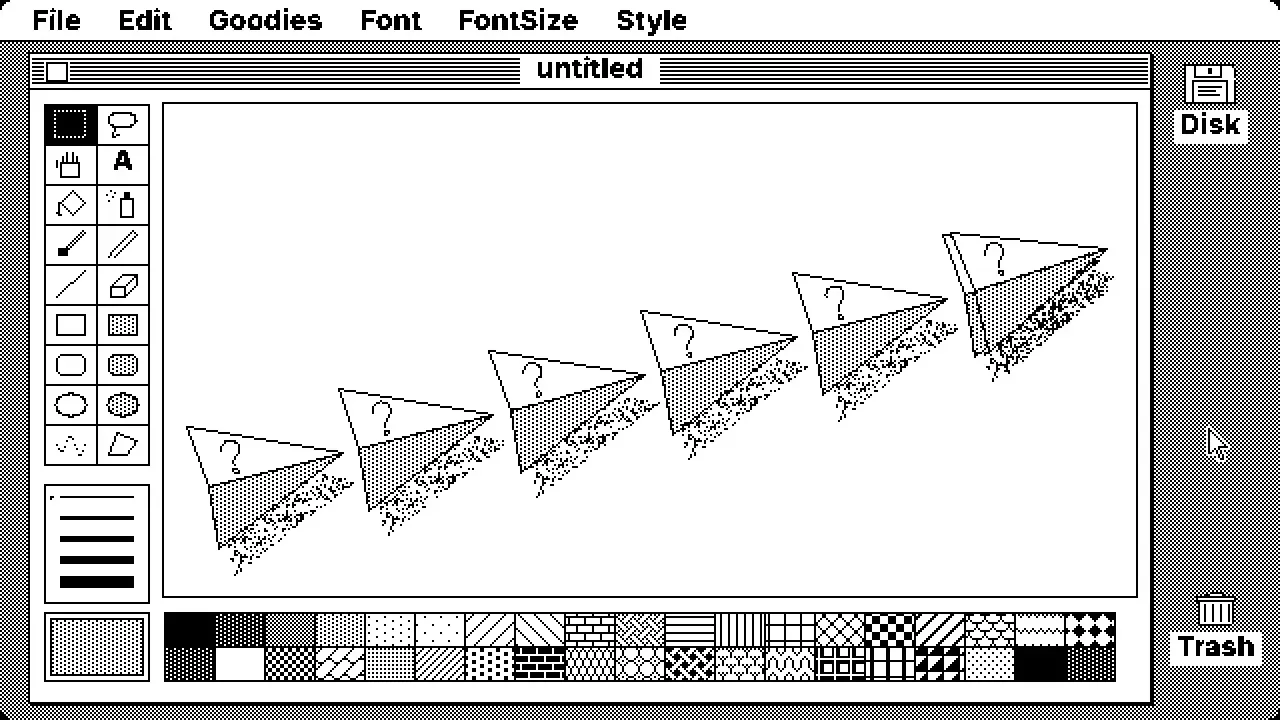
- In an early paint program you draw the plane, copy it and nudge it along: a flipbook inside a machine.
- Later you draw only the first and last picture, and the computer draws every picture in between.
What changes between art styles
Across all 25 styles, the trick never changes. What changes is the medium: what the plane is made of in each world. It is a leather puppet on a rod, a single ink stroke, a carved and printed block, a frame on a film strip, a clay model with fingerprints, a ship of bright lines, a pixel sprite, a neon wireframe, heavy painted strokes, and at the end a pencil drawing. Each world draws the plane in its own medium, but it stays the same character.
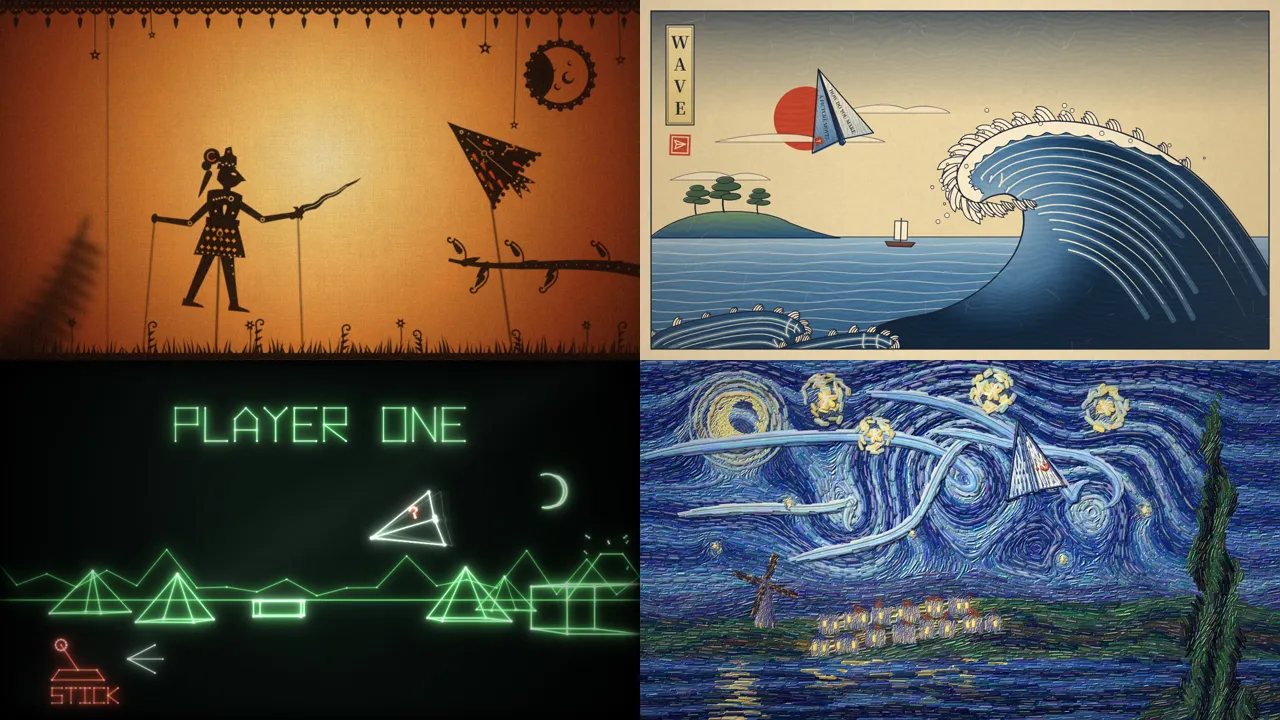
The film does not simply cut from one style to the next. Each world hands the plane on with one of four moves:
- A doorway: the lamp throws the plane’s shadow on the wall, and the shadow theatre opens behind it.
- A thread: one shape becomes the next, as when the shadow’s edge turns into a brush stroke.
- A dive: the camera goes into a picture inside the picture, such as the little sea the monk paints.
- A pullback: the picture was part of something bigger all along, as when the wave print turns out to be a sheet on a printing press.
Try it yourself
The film ends with the answer written under the question: draw it again and again, each one a tiny step along, then show them fast. In the morning the child does exactly that, and this time the plane flies.
Draw a small plane in the corner of each page of a notebook, each one a little further along than the last. Keep the steps small. Flip the pages fast.
Allan made this film with Claude Code. Every frame is drawn in code, with no still images, no stock footage and no AI image or video generation. The voices are synthetic (ElevenLabs) and the music is an original lullaby composed in code. The next lesson shows the system that made it.