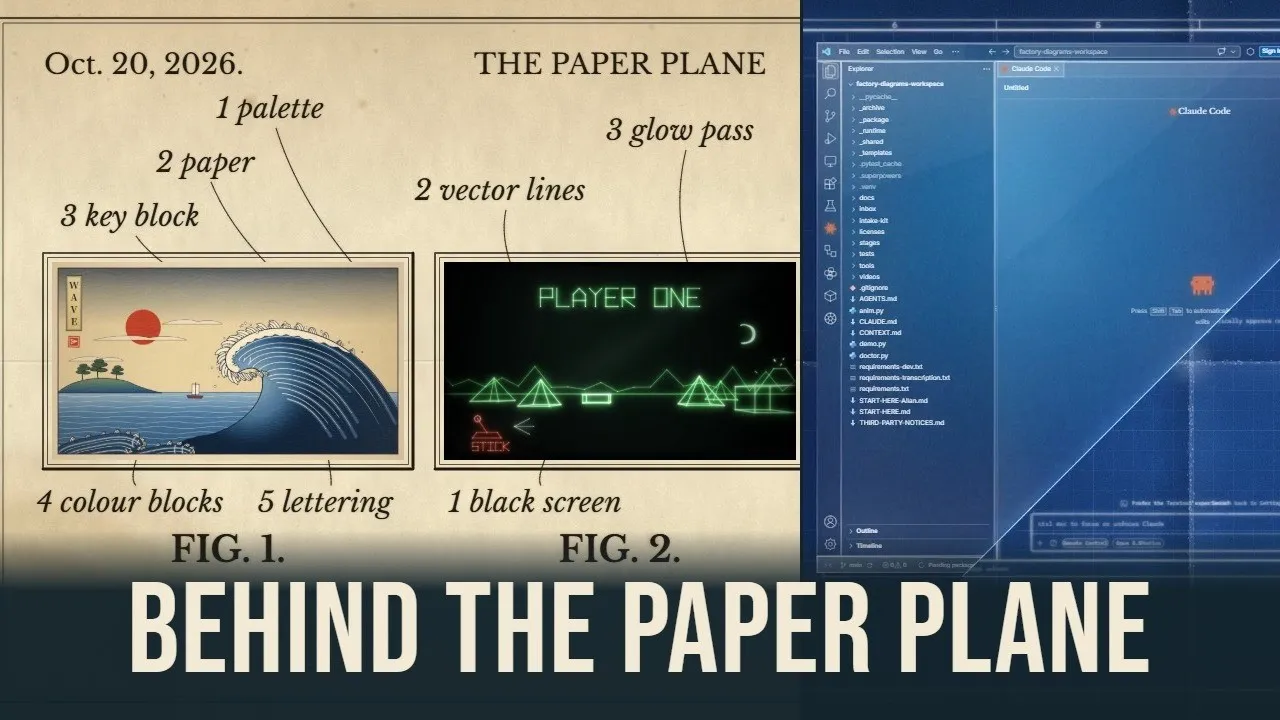
This lesson shows the system that made The paper plane: how the project was prepared, the five stages and seven gates the film went through, and how checks and reviews caught what went wrong. After it you should be able to explain why the film did not depend on a clever prompt.
What was made, and who did what
The paper plane is 9:31.6 long, with 25 art styles and eight voices. It was approved about 26 hours after the first files went in (15:29 on day one to 17:26 on day two) and posted that evening. Allan made it with Claude Code, an AI that writes code and runs commands in a project. In his words, the idea, the story and every decision are his; Claude Code writes the code and runs the stages.
It started from an older project
The work did not start on a blank page. Allan carried the way of working from an older project, where he makes build videos: write the words first, record the voice, draw the pictures to fit the voice, and have a person check each step before the next one starts. To that he added 80+ art styles, each written down as a file (how it looks, how it moves, how it explains) with the code that draws it. Then, before any code, a plan was written and approved by Allan.
The step that mattered most: one home for every rule
The first afternoon went into tools: a player, a voice tool that sends each line to ElevenLabs (a speech service), moves that carry the picture from one world into the next, a music engine and a renderer. At 18:57 Allan approved a short test film.
Then came the step the film calls the real story, and it was not code. At 19:40 the whole project was gone through, file by file. Every rule got exactly one home. So did every status.
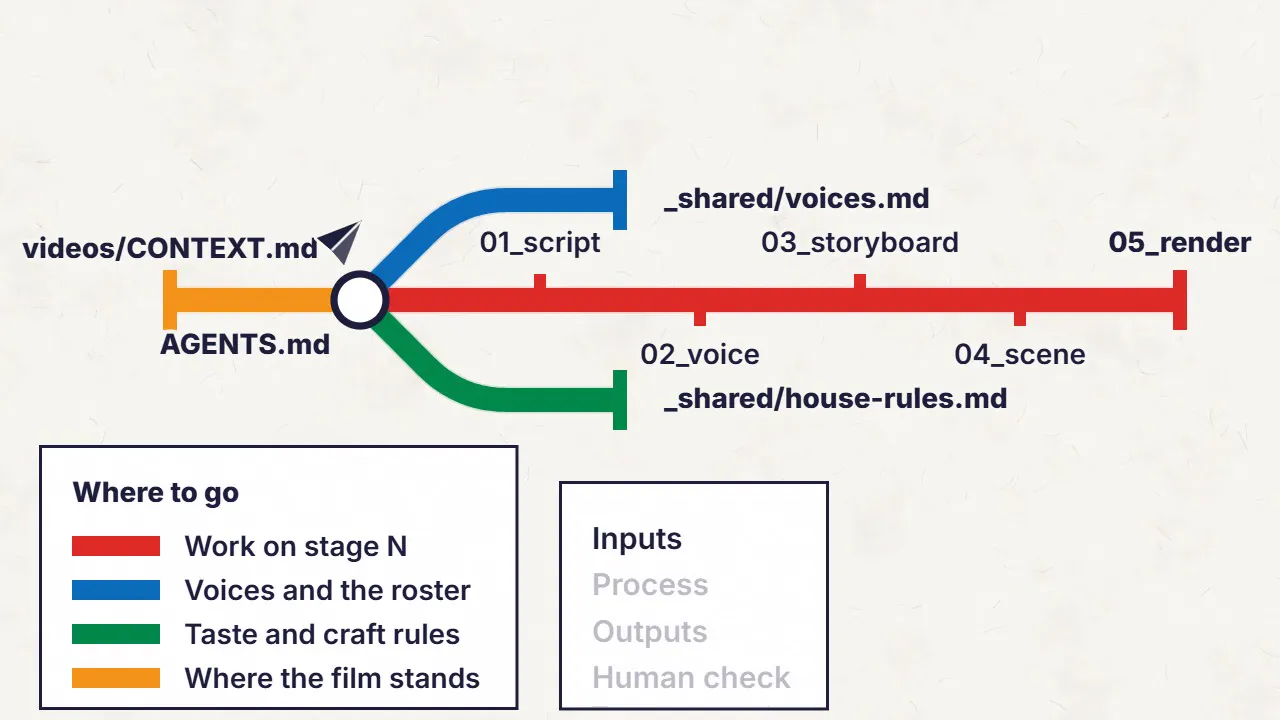
Each stage has its own short contract: what comes in, what is done, what goes out and who checks it.
Why it matters: drop an AI into a messy project and it wanders. It reads everything and guesses, and every file costs time and tokens (the units an AI’s usage is counted in). Here it reads the map and goes straight to the right file. The film says far fewer tokens were spent, but gives no number; none was measured.
Minutes later Allan added one more rule: each act is finished, all the way to the final film file, before the next one is written. Two hours after that, nearly three minutes of the film were done.
Five stages, seven gates
Every part went down the same line: five stages, with gates where the work is checked and logged before the next stage starts.
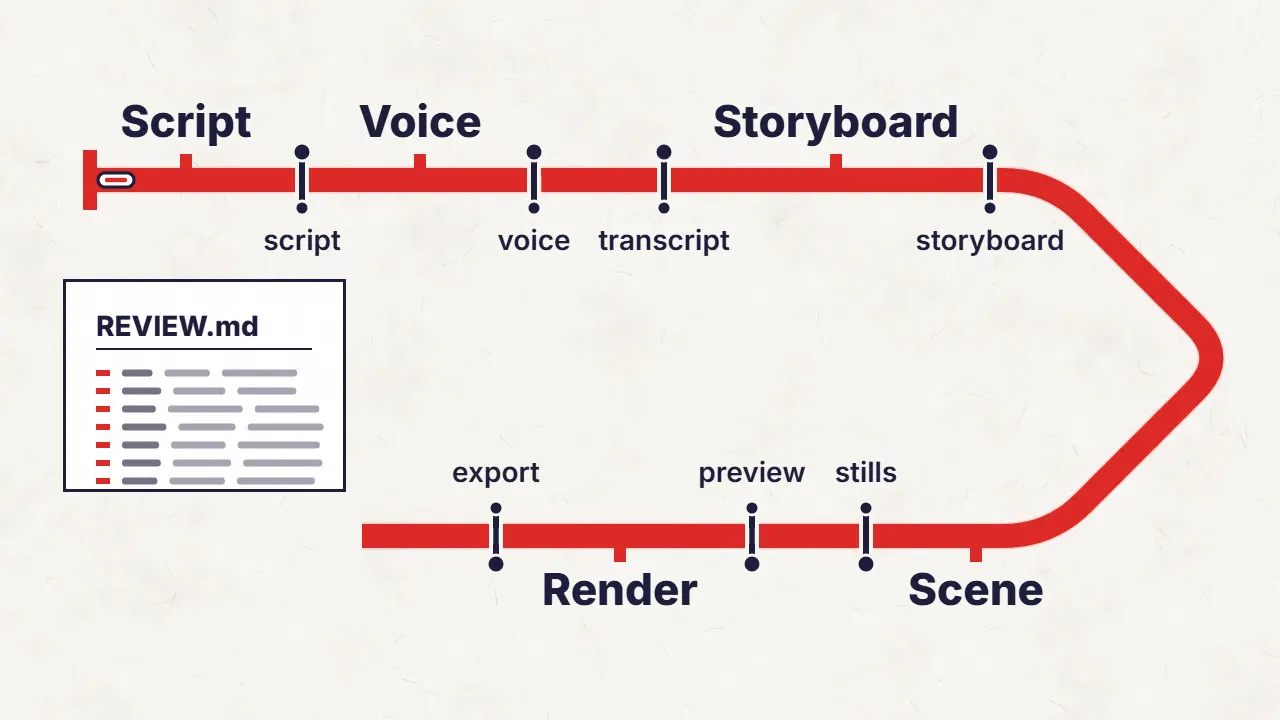
- Script. Each line is tagged with the voice that speaks it, for example
[lamp] How do you make a picture move? - Voice. Each line goes to ElevenLabs and comes back as sound. The monk’s voice was designed from a short written description; three versions came back and Allan picked the first. Then a speech-to-text program writes down every word with its time. It heard “flew” as “Blue”, and once wrote “Thank you.” when nobody had said it. Both were caught against the recordings and fixed.
- Storyboard. Each picture is tied to an exact spoken phrase. Later the scene is checked as stills, one picture for every moment, before anyone presses play.
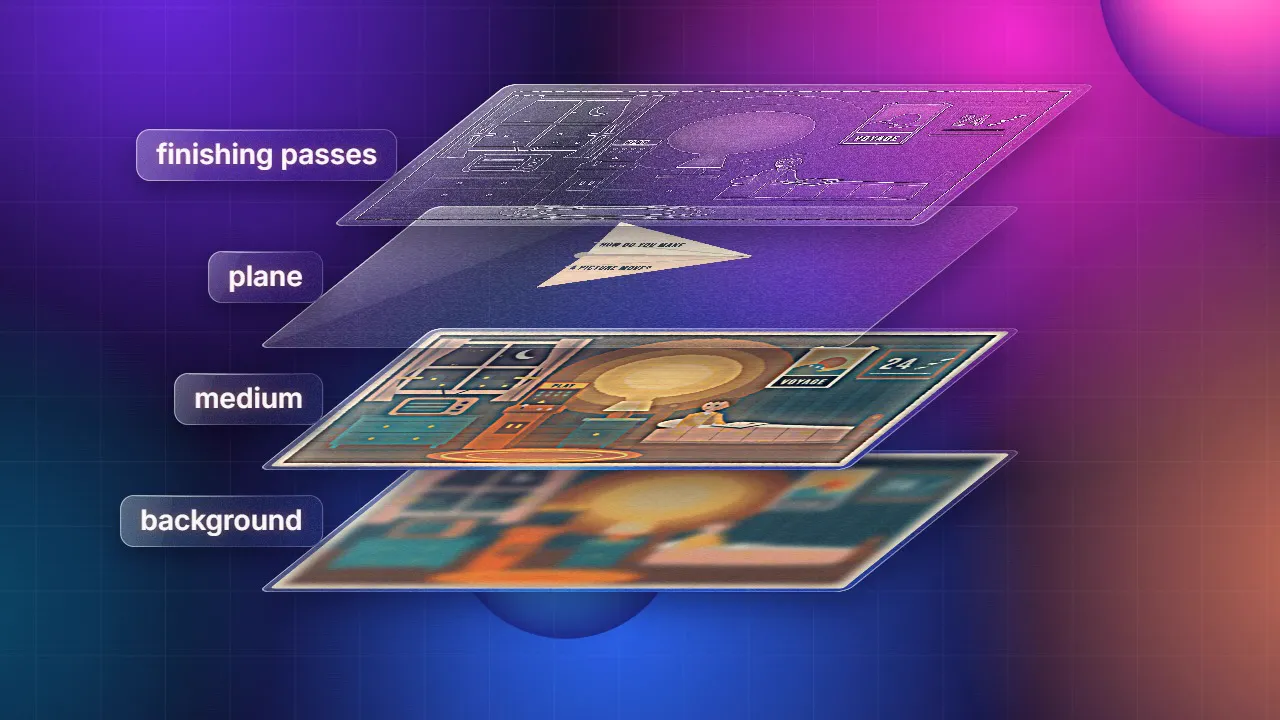
- Scene. A frame is built in layers: background, medium (ink, chalk, clay or light), the plane, then finishing passes such as grain and glow. Each frame depends only on the time, so the same moment always gives the same picture.
- Render. Thirty frames a second, several drawn side by side in browsers nobody sees, then joined with the voice and music. More than 17,000 still pictures, shown fast: the trick the first film is about.
Checks and reviews that cover each other
At first Allan checked every gate himself. Then he handed over the rest of the first act (“I put the creative trust in you.”), and from act two on he approved each act before it was written and watched what came back. Trust did not mean looking away. There were bumps:
- The teacher’s voice came out far quieter than the others, so the AI built a tool that brings every voice to the same loudness.
- The AI cannot hear. At the preview gate it measured what it could and wrote down plainly: “no ears here”. Allan’s own listen was the real preview.
- The star chart went blank 7 minutes 20 seconds into the joined film. Allan saw what the checks had missed. The AI found why (one of the pages drawing frames side by side had lost its graphics), and the renderer learned to notice that and draw those frames again.
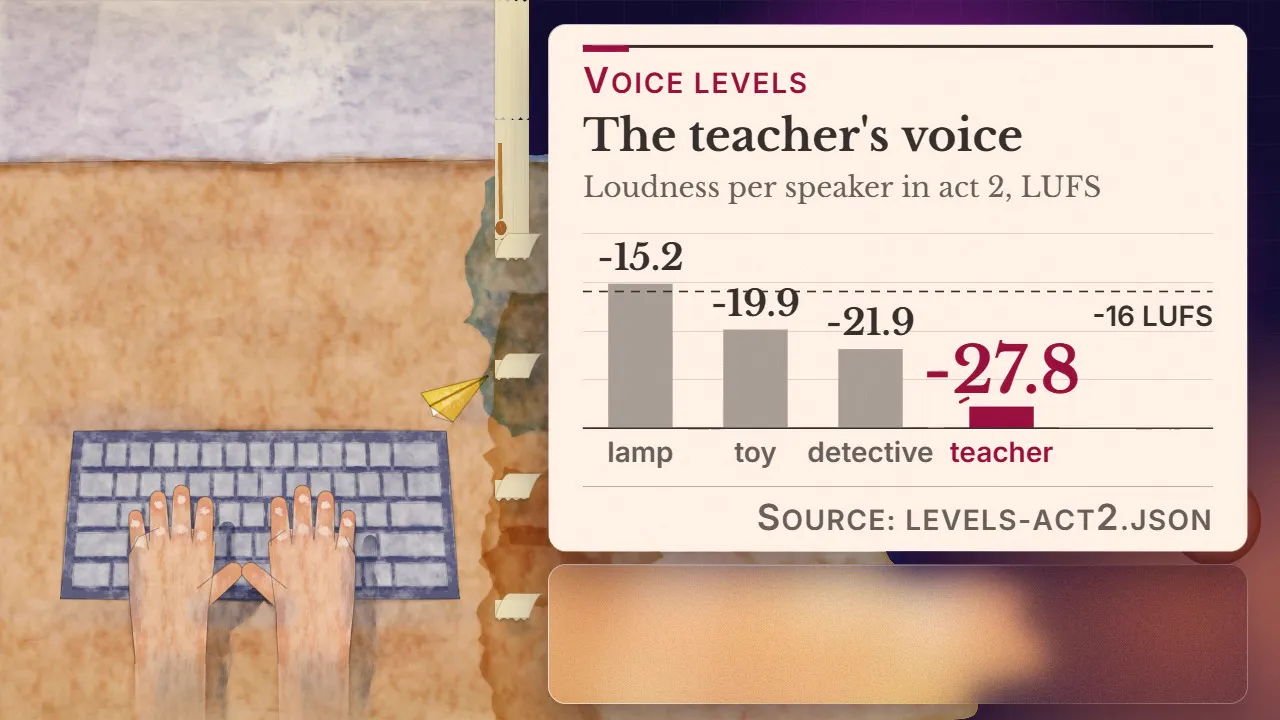
Act after act, the AI also added new checks and wrote down what it had learned, and the next act started from there. The film sums it up: he sees what it cannot, and it measures what he cannot.
What to take from it
It was not a magic prompt. It was preparation: a person who built the system (clear folders, written rules, one contract for every stage, gates where he says yes), and an AI that works inside it, knowing where to look and what done means. By the posting, the project held 126 commits, each a saved step with a note saying what changed. That record is how this second film could be told.
Try it on your own project
You do not need a film to use this. Before you hand a project to an AI:
- Write one top file that sends each kind of task to the one file that explains it.
- Keep every rule and every status in exactly one place.
- Give each stage a short contract: what comes in, what is done, what goes out, and who checks it.
- Put a gate after each stage where a person says yes, and write that decision in a log.