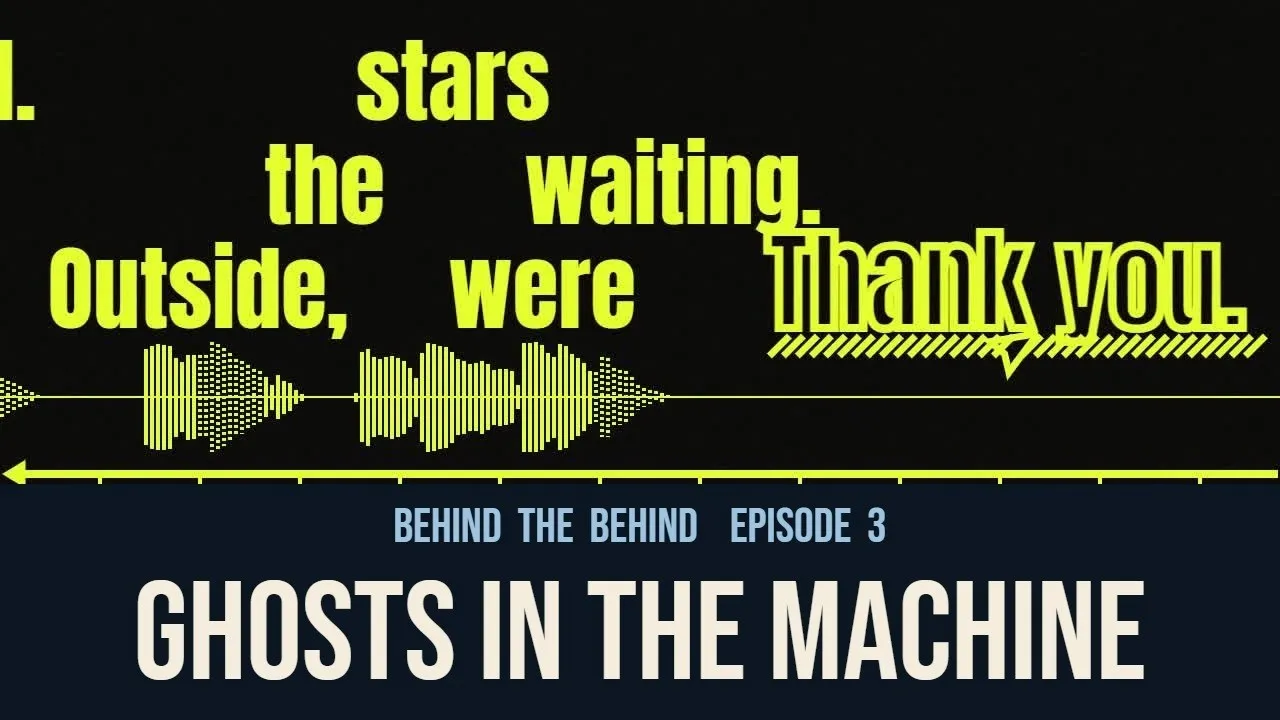
This lesson walks through the strange mistakes machines made while Allan and Claude (an AI) built these films, and the check that caught each one. After it you should be able to name each kind of mistake and know what kind of check finds it.
These are not the mistakes a person makes. A person does not hear words in a silent room. Machines do.
First, how a film here is timed
Every film is spoken first. Then a speech-to-text program called Whisper listens to the voice and writes down each word with the moment it was said. The pictures wait for those moments: each picture is tied to an exact spoken phrase. So a word that is wrong, or in the wrong place, puts a picture in the wrong place too.
Kind 1: words heard in silence
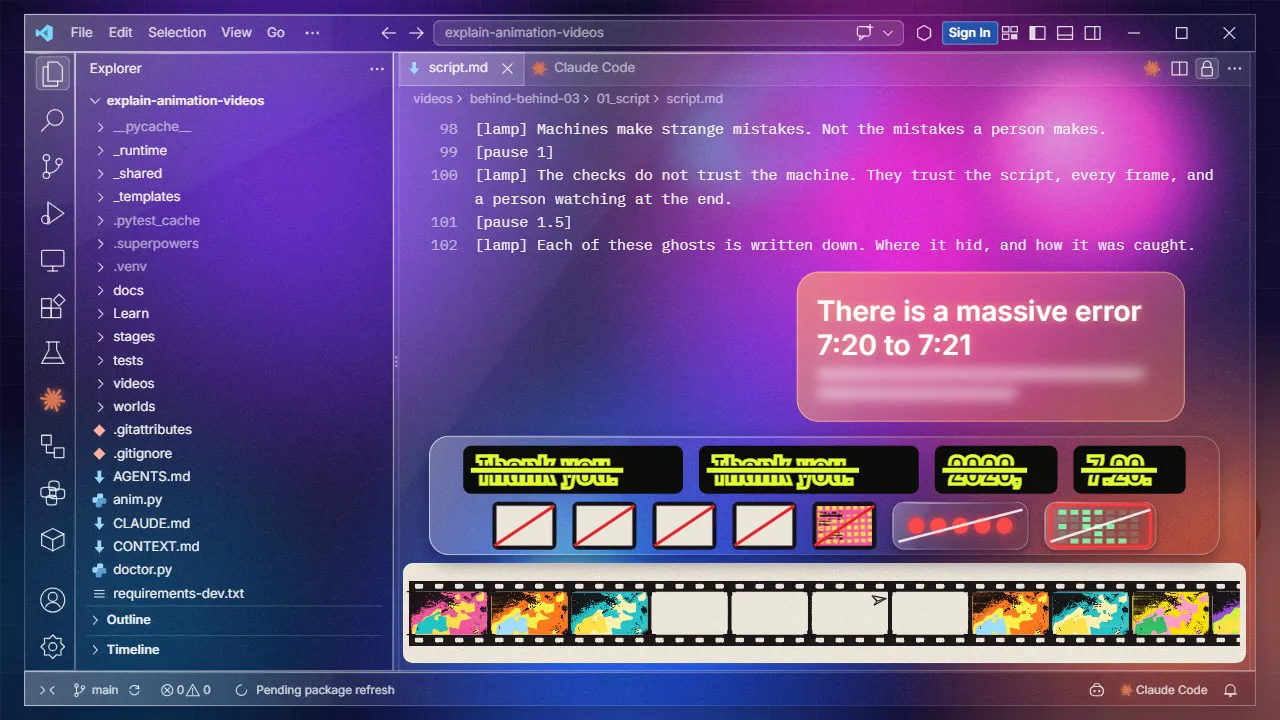
In the first film, The paper plane, there was only silence after the last line of one act. Whisper wrote “Thank you.” Nobody had said it.
It happened again in Behind the paper plane, the film that told that story. Its last line was “That is how they grew.” Then came four seconds of silence, and Whisper wrote “Thank you.” A second model listened to the same silence and heard “Thank you” too. Two machines agreed. The script did not.
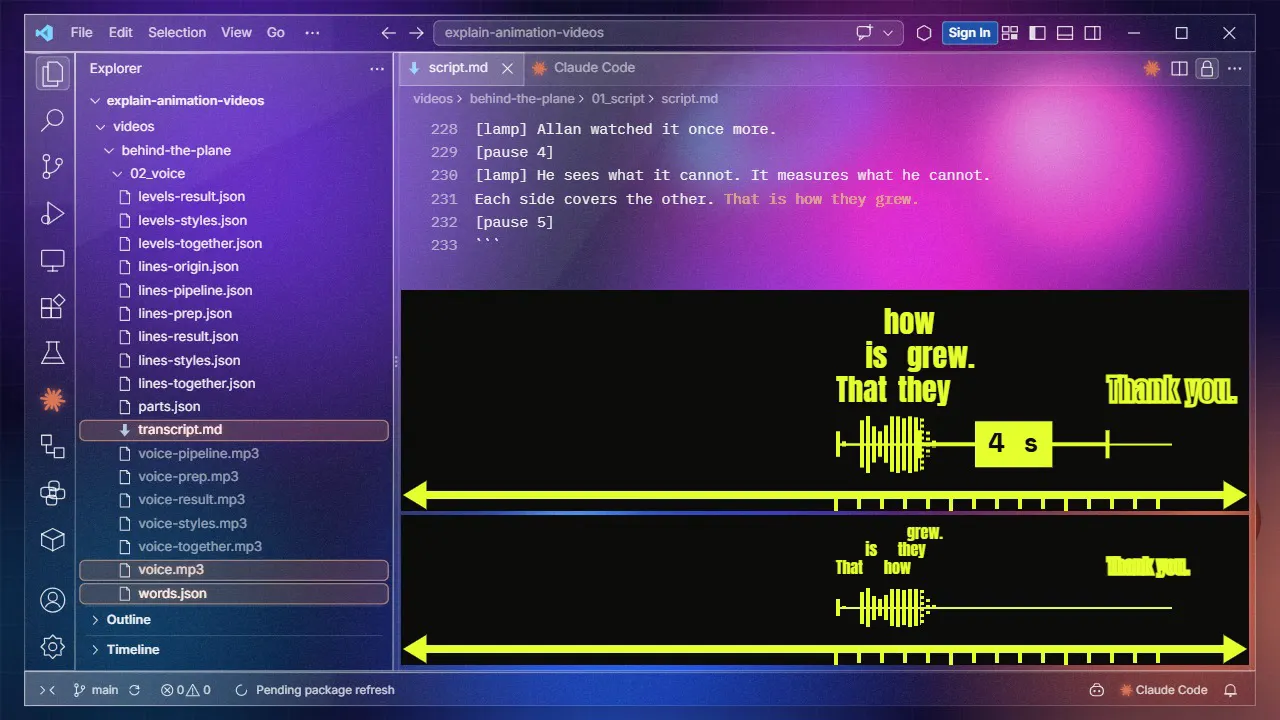
What catches it: every heard word is held against the script, the words that were meant. A word the script does not have is flagged to be listened to, and when nobody said it, it comes out.
What prevents it: these ghosts like silence, so the silence is kept from the program. When a part opens with seven quiet seconds, Whisper never hears them. It gets the voice from the first word, and its word times are simply moved seven seconds on.
Kind 2: numbers let through on purpose
The script check has one door left open: numbers. A year reads better on screen as digits (1958, not nineteen fifty-eight), so a short swap that holds a digit is not flagged. The ghosts with numbers walked straight in. “Twenty to eight” became the year 2028. Even the first episode of this series had one: “seven twenty” written as 7.20 with a dot.
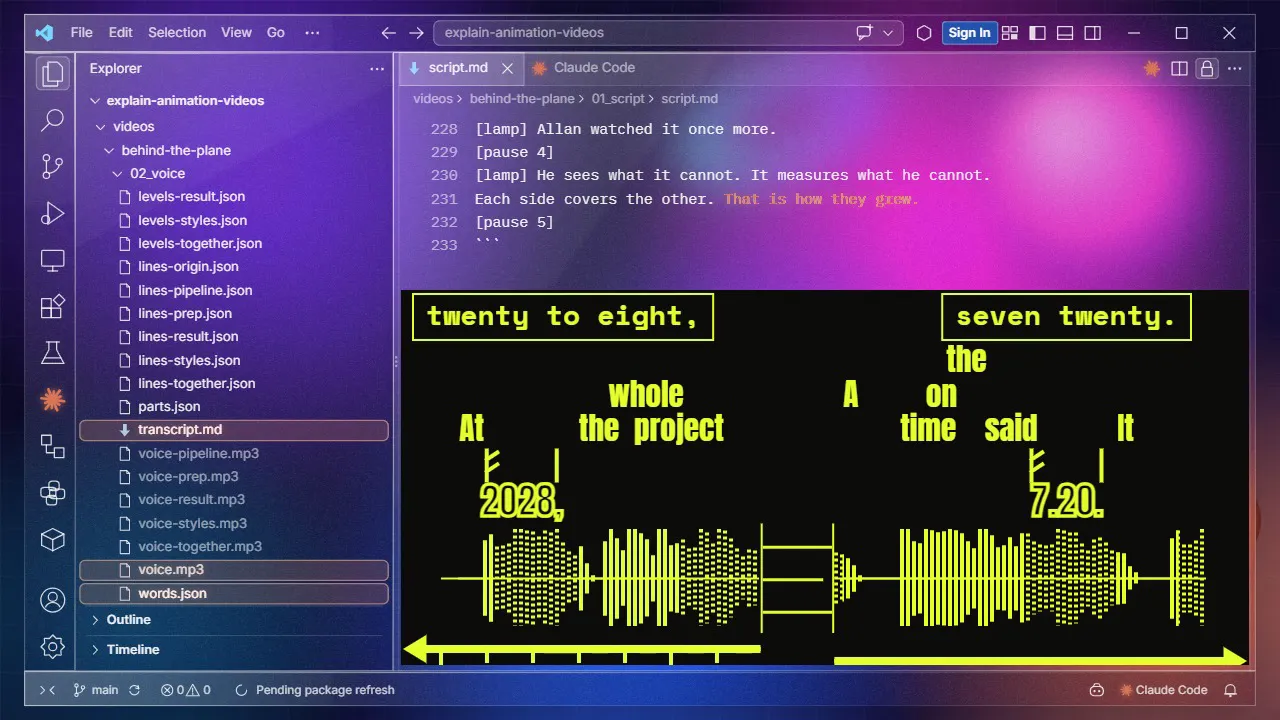
What catches it: a later step, where every written word is read and suspicious ones are compared with the recording, before any picture is timed to it.
Kind 3: pictures that break without a sound
A film is a row of still pictures, thirty every second. Behind the paper plane has 22,464 of them. The checks look at samples: a still for each moment in the script, and a frame every half second.
In the first film, a drawing page in the renderer lost its graphics. Four frames went blank, and the render finished as if nothing had happened. Allan found it by watching, and wrote: “There is a massive error”. Half an hour later the renderer learned to notice a lost page and redraw those frames on a fresh one, and tests were written to guard that.
Then the guard itself broke. The next night, five of those tests failed. The renderer was fine: a test that ran before them had left something running. Fixed at the root, all 535 tests passed.
Kind 4: a mistake that lives between the samples
That evening a render stopped, five minutes and forty-four seconds in. A glass circle had just begun to grow, and for its first frames its edge was asked to be smaller than nothing (a circle with a negative size). Every sample missed it. It lived between them, where only the render, drawing every single frame, could land.
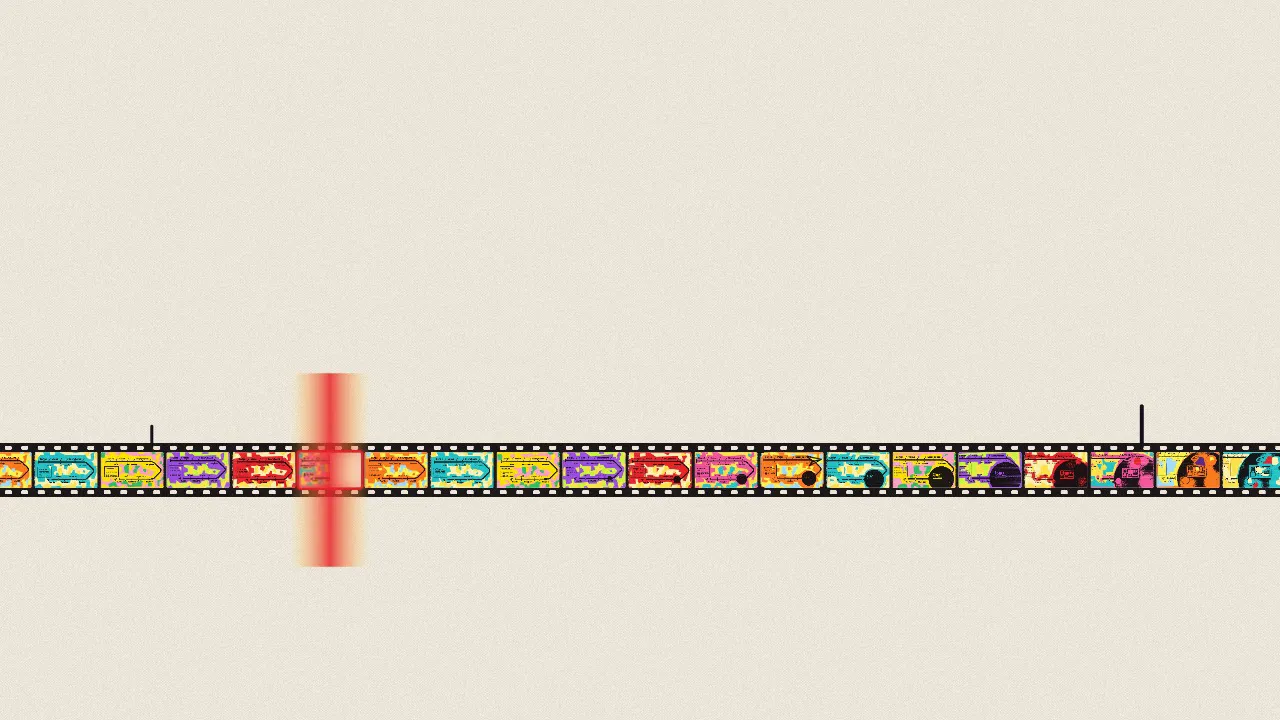
A loud ghost is the good kind: it stopped the render with an error instead of slipping through. The edge was fixed, and every frame of that part was checked. There was no other.
Kind 5: a check that sees a ghost that is not there
Checks make strange mistakes too. A test that scans the screen for secret keys flagged a picture of glowing digits. The digits were stored as long strings of ones and zeros, and to the scan that looked like a key. Written another way, in short groups, it was the same picture and no secret.
What actually catches them
The checks do not trust the machine. They trust three other things: the script, every frame, and a person watching at the end.
To use this in your own work:
- Hold machine output against something a person wrote and meant, not against another machine. Two machines can agree on the same mistake.
- Know where your check lets things through on purpose, and check that door another way.
- Keep the input away from the machine’s known weak spots, as the silence was kept from Whisper.
- Samples miss what happens between them. Let the full run fail loudly.
- Write each ghost down, where it hid and how it was caught. Every one in this lesson is in the project’s logs.